

Rehab & Addiction Treatment FAQs in Islamabad
Rehab FAQs Islamabad brings together answers to common questions families ask about rehabilitation, detox, counselling, psychiatry, residential treatment, admissions and continuing recovery at Islamabad Rehab & Caring Center.
These answers provide general information only. Treatment decisions should be based on an appropriate professional assessment of the individual situation.
Families Usually Have More Questions Than Answers
Choosing rehabilitation can involve questions about withdrawal, treatment structure, medical and psychiatric support, accommodation, privacy, family involvement and what happens after residential care.
This page provides a starting point. If a situation is medically complex, urgent or specific to one person, contact IRCC directly rather than relying on general website information.
Admissions & Assessment
Questions families commonly ask before arranging an assessment or admission.
How do I admit someone to a rehabilitation center in Islamabad? +
The process usually begins with a conversation about the person's current condition, substance use, mental-health concerns, medical needs and immediate circumstances. IRCC can then explain the assessment and possible admission process before a treatment decision is made.
Contact Admissions ↗What happens during the first assessment? +
An initial assessment helps the treatment team understand substance-use history, current symptoms, previous treatment, physical health, mental health, medicines and other factors that may influence treatment planning.
Can a family member contact IRCC before the patient does? +
Yes. Families often make the first enquiry when they are trying to understand treatment options, intervention support or what steps may be appropriate. Any later treatment decision still needs to consider the individual's circumstances, privacy and applicable clinical requirements.
Do I need to know which treatment program is needed before calling? +
No. You can describe what is happening and ask the team about an appropriate starting point. Assessment should guide treatment rather than a family having to select a clinical service alone.
Can someone be forced into rehabilitation? +
Questions involving consent, involuntary care or immediate safety can depend on the person's condition, circumstances and applicable law. They should be discussed directly with qualified professionals rather than decided from a website FAQ. If there is immediate danger, seek urgent medical or emergency assistance.
Detox & Addiction Treatment
General questions about detoxification, addiction therapy and structured treatment.
Does IRCC provide drug and alcohol detox? +
IRCC lists Drug & Alcohol Detox among its treatment services. Detox requirements can vary considerably depending on the substance used, pattern of use, physical health and withdrawal risk, so the appropriate level of support should be determined after assessment.
Read About Detox ↗Is it safe to detox from drugs or alcohol at home? +
Some withdrawal syndromes can become medically serious. The safest setting depends on the substance, level of dependence, medical history and current symptoms. Severe withdrawal should not be managed based on website instructions; seek professional medical assessment.
What is addiction therapy? +
Addiction therapy can address patterns of substance use, triggers, coping strategies, motivation, behaviour, emotions and relapse risk. The exact therapeutic approach should depend on individual assessment and treatment planning.
Explore Addiction Therapy ↗Does treatment include counselling? +
Counselling is one of the support services provided within IRCC's rehabilitation environment. It may focus on substance-use patterns, emotions, behaviour, coping, relationships and continuing recovery.
Counselling Information ↗How long does rehabilitation treatment take? +
There is no single treatment duration suitable for everyone. Length of care may depend on the substance-use history, physical and mental health, treatment response, circumstances and recommended continuing-care plan.
Does rehabilitation guarantee permanent recovery? +
No healthcare provider can responsibly guarantee a specific addiction-recovery outcome. Recovery varies between individuals and may require continuing treatment, behavioural change, family or social support and relapse-prevention planning after residential care.
Psychiatry, Counselling & Mental Health
Questions about psychiatric, psychological and medical support.
Is psychiatry available alongside addiction treatment? +
IRCC provides Psychiatry OPD alongside its rehabilitation services. Psychiatric assessment may be relevant when substance use occurs together with mood, behavioural, psychotic, anxiety-related or other mental-health concerns.
Psychiatry OPD ↗What is the difference between psychiatry and counselling? +
Psychiatry involves medical assessment of mental-health conditions and may include medication where clinically appropriate. Counselling focuses more directly on psychological, emotional, behavioural and recovery-related conversations and skills. Some people may benefit from both.
Does every patient receive psychiatric medication? +
No. Medication should only be considered when clinically appropriate and prescribed by a suitably qualified clinician. Treatment should be individualized rather than assuming every patient requires the same medicines.
Is general medical care available at IRCC? +
IRCC lists General Medical OPD among its services for medical consultation and assessment. Medical review may also be useful when physical-health concerns occur alongside addiction or mental-health treatment.
General Medical OPD ↗Residential Care, Privacy & Families
Questions about accommodation, family communication and the treatment environment.
Is rehabilitation treatment confidential? +
IRCC presents privacy and confidential communication as important parts of its treatment and admissions environment. Specific privacy arrangements can be discussed directly with the center before admission.
What accommodation options are available? +
IRCC's facility gallery shows different residential room arrangements, including private or premium-style rooms and shared accommodation. Availability should be confirmed directly when discussing admission.
Explore the Center ↗Can families speak with the treatment team? +
Family communication may form part of the wider recovery process where appropriate. The exact level of information that can be shared should respect patient privacy, consent and clinical considerations.
Can family members visit during treatment? +
Visiting arrangements can depend on the stage of treatment, center policy, patient privacy and clinical considerations. Confirm the current visiting arrangements with IRCC before travelling to the center.
Are mobile phones allowed during residential treatment? +
Device and communication policies may vary according to the treatment setting and stage of care. Ask the admissions team about the current policy before admission.
Relapse Prevention & Continuing Recovery
Recovery planning does not necessarily end when residential treatment ends.
What happens after residential rehabilitation? +
Continuing care may involve relapse-prevention planning, counselling, follow-up, rebuilding routines and other recovery strategies based on the person's needs.
Relapse Prevention ↗What is relapse prevention? +
Relapse-prevention work can help a person identify triggers, warning signs, high-risk situations and coping strategies while building a plan for maintaining recovery over time.
What is Extended Care? +
Extended Care provides additional structured recovery support for people who may benefit from more time, continued monitoring, therapeutic work or a gradual transition beyond the initial phase of treatment.
Extended Care ↗Does IRCC provide spiritual support? +
IRCC's Spiritual Therapy service is designed around reflection, personal values, meaning and spiritual wellbeing as a complementary part of the broader recovery environment. It should not replace necessary medical, psychiatric or psychological care.
Spiritual Therapy ↗What if someone returns to substance use after treatment? +
A return to substance use can indicate that the recovery plan needs reassessment. Contact an appropriate treatment professional to review safety, current substance use, triggers and whether additional treatment or support is needed.
Location, Contact & Visiting IRCC
Useful information before calling or visiting the Soan Garden center.
Where is Islamabad Rehab & Caring Center located? +
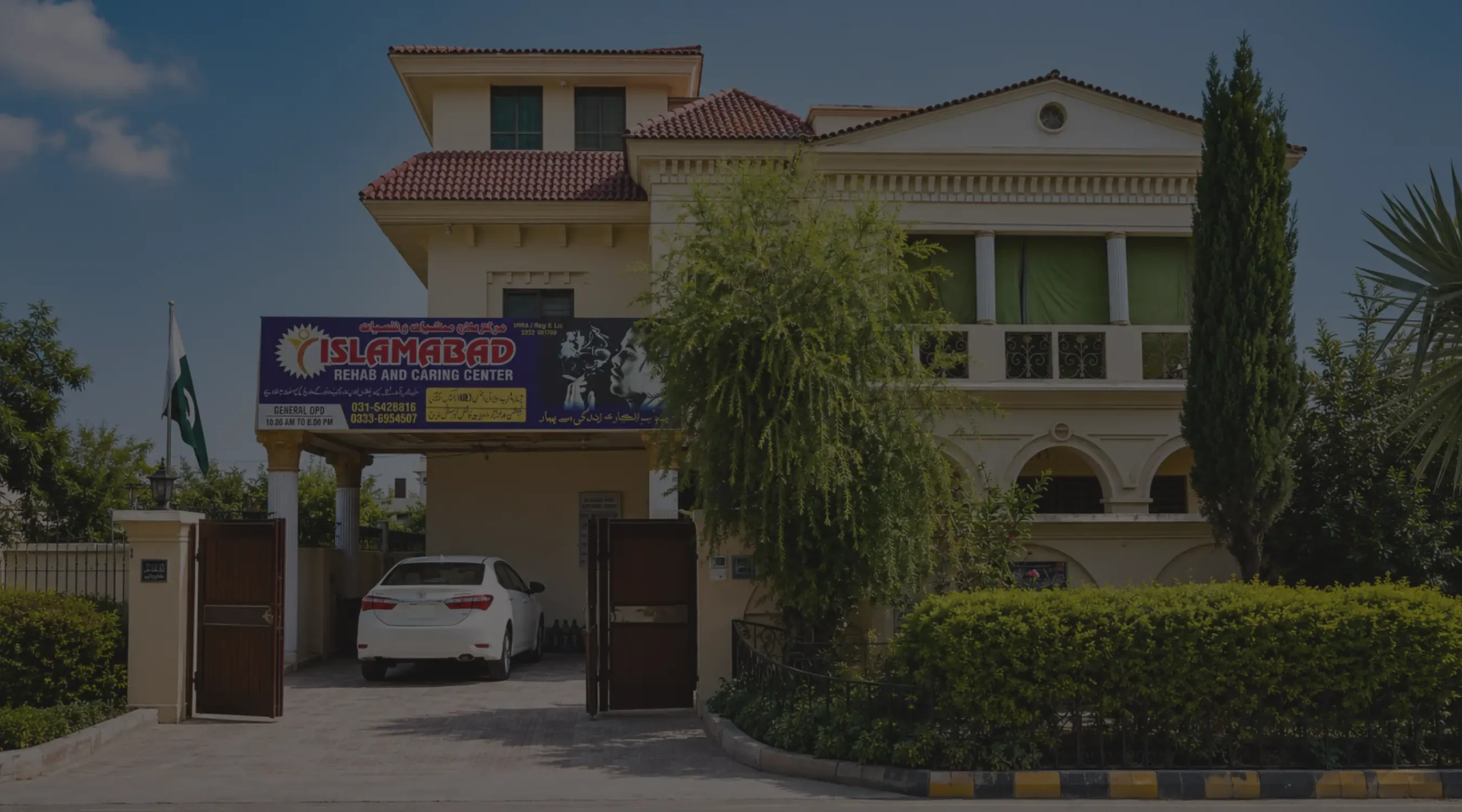
The IRCC Soan Garden center is located at House #02, Block E, Soan Avenue, near PSO Pump, Soan Garden, Islamabad 44025.
Contact & Location ↗What is the IRCC contact number? +
You can contact IRCC on 0333 6954507 or the landline 051 5428137. WhatsApp is also available on 0333 6954507.
What are the published OPD hours? +
IRCC currently publishes OPD hours of 10:00 AM to 8:00 PM. If you need a specific clinician or service, contact the center before travelling to confirm current availability.
How much does rehabilitation cost? +
Treatment cost can depend on the recommended level of care, duration, accommodation and individual requirements. Contact IRCC directly for current fees rather than relying on an outdated website quotation.
Does IRCC have another clinic in Islamabad? +
The clinic network includes the Soan Garden center featured on this website and a separate PWD Housing Society location. Visit the Our Clinics page for branch information.
View Our Clinics ↗No matching question found
Try another search term or contact the IRCC team directly.
Contact IRCC ↗Some Situations Need Immediate Medical Attention
Severe withdrawal, overdose, seizures, loss of consciousness, severe breathing difficulty, suicidal intent, severe confusion or agitation, serious chest pain, major injury or immediate danger to the person or others should not be managed through a routine website enquiry. Seek appropriate urgent or emergency medical care.
Learn More From International Clinical Guidance
Independent resources can help families better understand substance-use and mental-health treatment, but they still cannot replace an individual assessment.
Some Questions Are Better Answered in a Conversation
If the question relates to a specific person's substance use, withdrawal, mental health, medical history or previous treatment, contact IRCC directly so the situation can be discussed in more context.
Start With the Question You Have Today.
You do not need to understand every stage of rehabilitation before making first contact. Speak with the IRCC team about what is happening and what type of assessment or support may be appropriate.
