
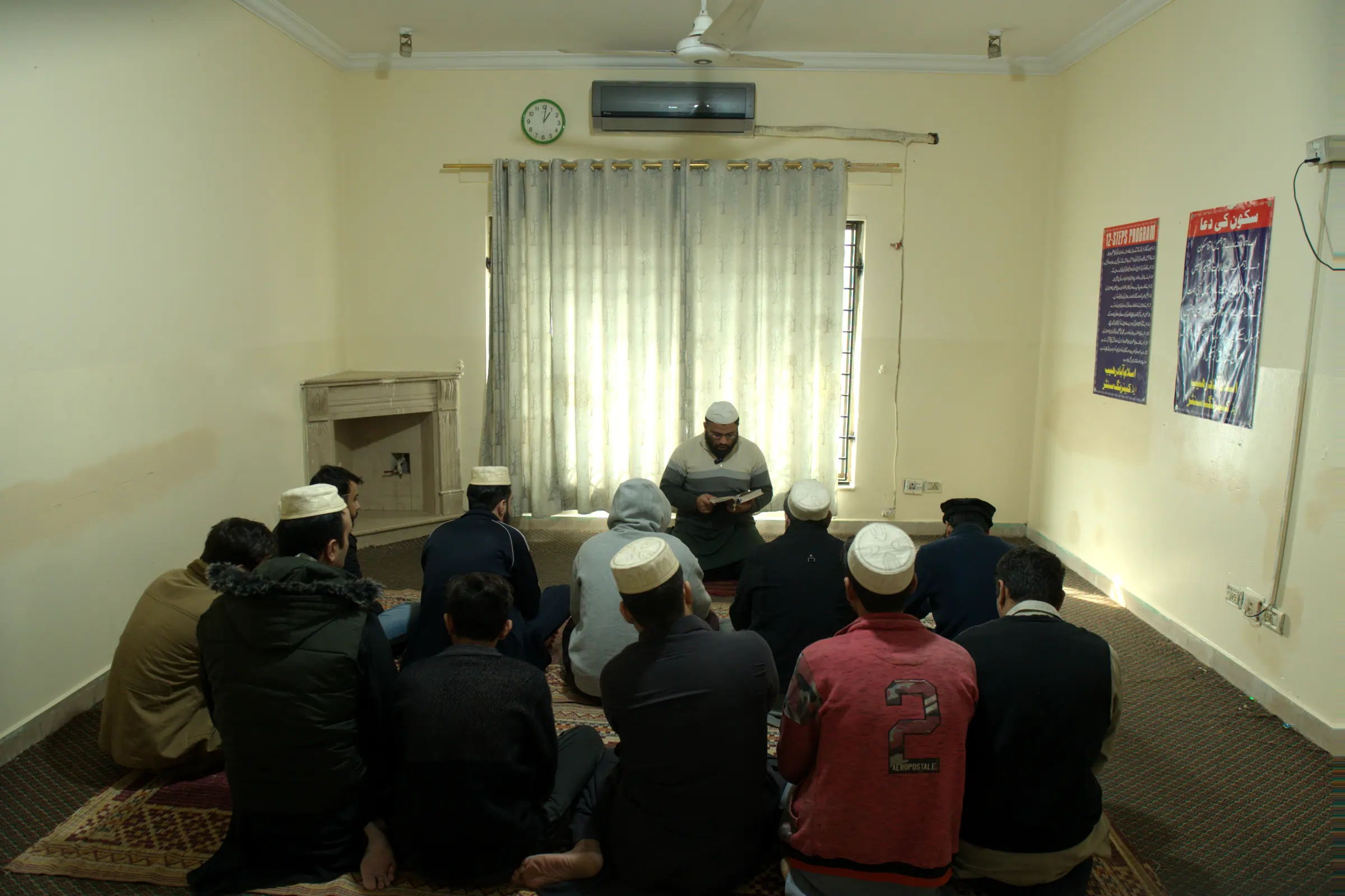
Spiritual Therapy in Islamabad
Spiritual Therapy in Islamabad at Islamabad Rehab & Caring Center provides an optional, values-based dimension of addiction recovery for people who find meaning, reflection, faith, purpose or personal beliefs important to their healing.
Spiritual support at IRCC is intended to complement professional addiction treatment—not replace medical, psychiatric or psychological care. The approach should remain respectful of each person's beliefs, preferences and level of participation.
What Is Spiritual Therapy in Islamabad?
Spiritual therapy within addiction recovery focuses on questions of meaning, personal values, hope, identity, responsibility and the kind of life a person wants to build beyond substance use.
For some people, spirituality is closely connected with religious faith. For others, it may involve reflection, mindfulness, gratitude, personal values, connection with nature, service, relationships or a renewed sense of purpose.
At IRCC, this form of support should remain voluntary and integrated with the person's wider treatment plan. It is not presented as a cure for addiction and should not replace clinically appropriate detoxification, addiction therapy, psychiatric treatment or medical care.


Spiritual Recovery Does Not Mean the Same Thing for Everyone
A person-centred approach leaves room for differences in beliefs, culture, personal values and how someone understands meaning or purpose.
Meaning & Purpose
Recovery can include exploring what makes life meaningful beyond substance use and what future direction feels worth protecting.
Personal Values
Identifying values can help compare short-term impulses with the kind of behaviour, relationships and life someone wants to build.
Reflection
Quiet reflection can create space to notice emotions, thoughts, behaviour and recovery decisions more deliberately.
Faith-Sensitive Support
Where personally important, religious or faith-based practices can be respected as part of the person's broader recovery plan.
Recovery Becomes More Personal When It Connects With a Reason
Addiction can narrow attention toward immediate relief, craving or avoidance. Recovery often requires rebuilding a wider sense of identity: relationships, responsibilities, health, dignity, work, family, beliefs and long-term goals.
Spiritual or values-based work can help a person ask not only, “How do I stop using?” but also, “What am I trying to build instead?”

Spiritual Support Can Take Different Forms
Practices should be selected according to personal preference, cultural context, physical ability and the wider treatment plan.
Mindful Reflection
Attention to thoughts, emotions and physical sensations can help some people observe an experience before reacting automatically to it.
Personal Faith Practices
Prayer, religious reflection or other faith practices may be incorporated when requested by the individual and consistent with their personal beliefs.

Nature & Quiet Time
Calm environments and reflective time may help some people slow down, think more deliberately and reconnect with recovery goals.
Gratitude & Self-Reflection
Reflective exercises can help identify sources of support, progress, responsibility and aspects of life worth protecting.
Service & Responsibility
For some people, contributing positively to family or community becomes part of rebuilding identity and purpose.
Spiritual Therapy Should Support Clinical Treatment—Not Compete With It
Addiction can involve physical dependence, psychological symptoms, psychiatric conditions, behavioural patterns and social problems. Spiritual support addresses only one part of that wider picture.
Drug & Alcohol Detox
Withdrawal and physical dependence may require clinical assessment and structured medical support.
Addiction Therapy
Therapy can address triggers, thinking patterns, behaviour, motivation and recovery skills.
Psychiatry OPD
Psychiatric symptoms require appropriate assessment and should not be interpreted solely as spiritual difficulties.
Relapse Prevention
Values and meaning can support recovery, while practical trigger and warning-sign planning remains important.

Spiritual Support Should Be Voluntary and Individual
A person's religion, spirituality or lack of religious belief is personal. Recovery support should not require someone to adopt beliefs that are not their own.
If faith is important to the individual, the treatment environment can respect that preference. If the person prefers a non-religious values-based approach, recovery work can instead focus on meaning, identity, reflection, relationships and personal principles.
Meaning Can Also Be Rebuilt Through Relationships
Recovery is not only an individual process. Healthy connection, accountability and belonging can become important parts of life beyond substance use.

Connection Without Losing Individuality
Supportive group environments can create space for listening, perspective and accountability while each person maintains their own recovery goals and beliefs.
Rebuilding Important Relationships
Values-based recovery can include examining honesty, responsibility, trust and the role someone wants to have within their family.
Family & Intervention Support ↗Carrying Meaning Beyond Treatment
Personal values become most useful when they continue guiding decisions after structured treatment has ended.
Extended Care ↗Spiritual Practices Should Not Replace Necessary Medical or Psychiatric Care
Severe withdrawal, overdose, psychosis, suicidal behaviour, seizures, loss of consciousness or other urgent medical or psychiatric concerns require appropriate professional or emergency care. Prayer, meditation, reflection or other spiritual practices should not be used as substitutes for clinically indicated treatment.
Meaning, Personal Goals and Human Dignity Belong in Recovery Planning
Independent WHO and WHO/UNODC resources describe recovery in person-centred terms that include wellbeing, personal goals, support networks, social functioning and rediscovering meaning and purpose in life.
Questions About Spiritual Therapy in Islamabad
Spiritual support should be individualised and offered as part of a wider recovery plan rather than treated as a universal solution for addiction.
What is spiritual therapy in addiction recovery? +
Spiritual therapy can involve exploration of meaning, values, identity, reflection, personal beliefs, faith or purpose as part of a broader addiction recovery plan.
Is spiritual therapy the same as religious treatment? +
Not necessarily. Some people connect spirituality strongly with religious faith, while others focus on personal values, meaning, reflection, relationships, nature or purpose without using a religious framework.
Is participation compulsory? +
Spiritual or faith-related participation should be voluntary and respectful of the individual's own beliefs and preferences.
Can spiritual therapy replace addiction therapy or detox? +
No. Spiritual support should complement appropriate clinical treatment. Physical dependence, psychiatric symptoms and other medical concerns may require specialist assessment and treatment.
Can mindfulness or reflection be part of the program? +
Reflective or mindfulness-oriented practices may be considered when suitable for the person and consistent with the broader treatment plan.
Can spiritual support continue after rehabilitation? +
Yes. Values, meaning, personal faith or reflective practices may continue to form part of a person's wider relapse-prevention and continuing-recovery plan.
Treatment Can Address the Addiction While Recovery Rebuilds the Life Around It.
Speak privately with the IRCC team about addiction, mental-health needs, personal values, faith preferences and the combination of professional services that may be appropriate for recovery.
